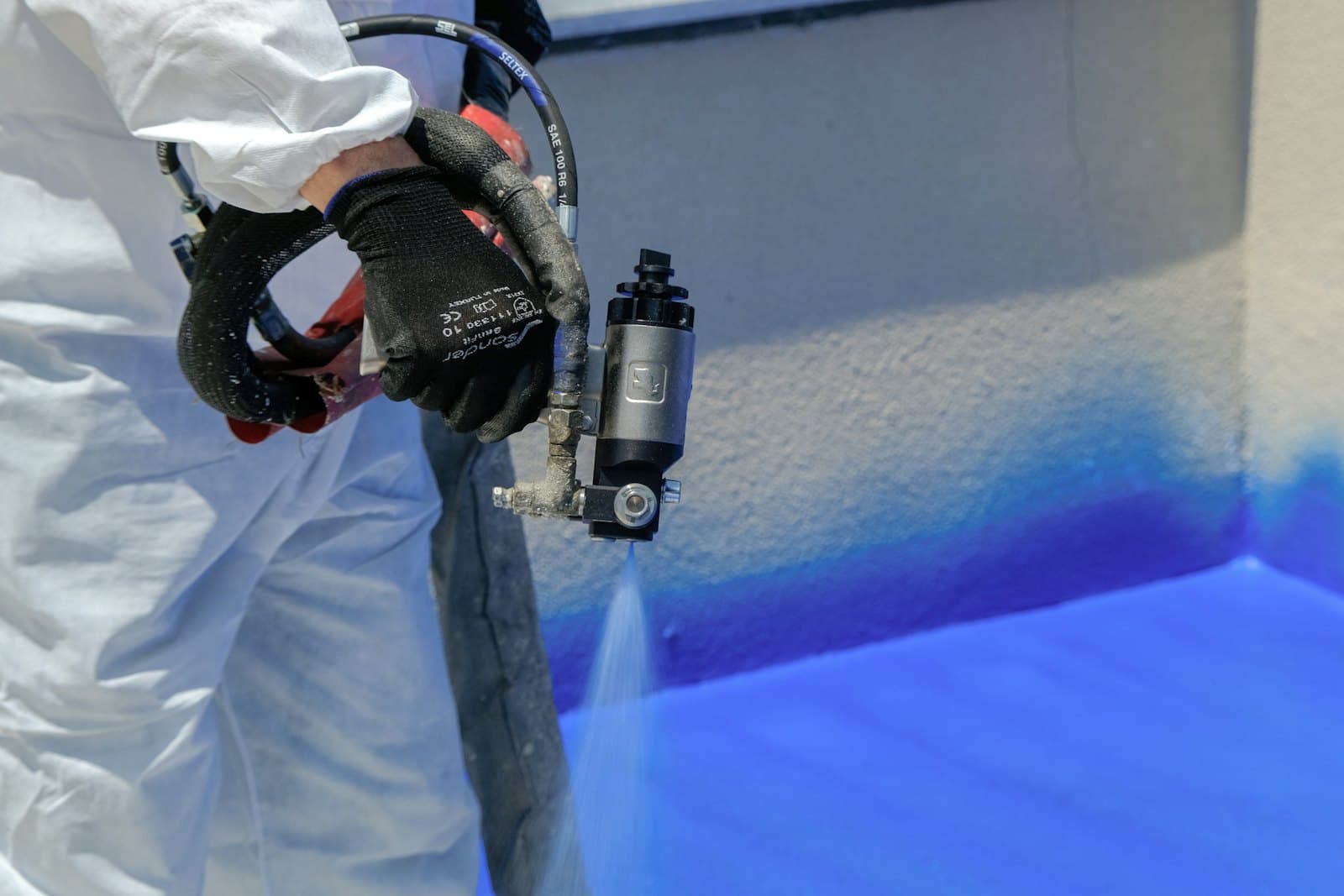
Group A · Loft and roof insulation
Spray foam insulation (open-cell)
Certified open-cell spray foam, only after an independent suitability assessment.
Typical price
Spray foam insulation (open-cell)
£1,800–£4,500
Spray foam, roof (open-cell, with independent assessment)
Book a suitability assessmentBefore grants · updated 11 October 2026 · a survey confirms the final figure.
- Best for
- Selected roofs
- Guarantee or standard
- BBA/KIWA cert; lender-ready pack
- Time on site
- The assessment comes first.
- Typical price
- £1,800–£4,500
What it is
What is spray foam insulation?
Certified open-cell spray foam, only after an independent suitability assessment.
Best for: Selected roofs.
Spray foam, done safely
Assessment first. Always.
RICS has warned that some lenders and valuers refuse properties with spray foam, and that independent suitability checks are needed. So we never quote an installation until the roof has been assessed — and we'll tell you if mineral wool is the better answer.
- Assessment firstA paid Spray Foam Suitability Assessment — roof structure, ventilation, moisture and lender position — comes before any installation quote.
- Open-cell, certified systems onlyYour quote names the system, its BBA or KIWA certificate and the installer's training card. Closed-cell foam on timber roofs is never offered as a standard option.
- Mortgage-ready paperworkEvery install comes with the assessment, photos before and after, and a certificate pack in the format current lender guidance asks for.
- Removal when it's the right answerIf spray foam is blocking a sale or remortgage, we remove it, inspect the timbers and re-insulate with breathable materials.
- Honest answersSome lenders and valuers refuse properties with spray foam. We say so plainly — and recommend mineral wool wherever it's the better choice.
Spray foam suitability assessment: £250–£450 — roof structure, ventilation, moisture and lender position, credited if you go ahead.
Book an assessmentWho it suits
Which homes is spray foam insulation suitable for?
Is my home suitable?
Pick your property type for a straight answer on spray foam insulation.
Guidance only — every home is different, and a survey confirms what suits yours.
Houses
Flats and blocks of flats
Commercial and public buildings
Usually suitable Depends — a survey confirms
Not usually suitable for 4 property types
- Period home — Historic roofs need breathable materials, so we recommend breathable alternatives instead of spray foam.
- Listed building or conservation area — Historic roofs need breathable materials, so we recommend breathable alternatives instead of spray foam.
- Park and mobile home — Park and mobile homes need specialist systems, which we arrange through a partner rather than standard measures.
- Mansion block — Historic roofs need breathable materials, so we recommend breathable alternatives instead of spray foam.
Materials and brands
What we use
Only after an independent suitability assessment; certified system only.
Spray foam brands we work with
- A third-party certified (BBA or KIWA) open-cell system only
Selected roofs after an independent suitability assessment. The exact system and brand for your home are confirmed in your written quote.
Heat, bills and EPC
What it does for your heat loss, bills and EPC
Open-cell spray foam insulates the roof slope and seals air gaps, so it can reduce heat loss through the roof. But for most lofts, mineral wool on the loft floor gives a similar or better improvement for less money and without the mortgage risk — the assessment tells you which applies to your roof.
See the EPC points and savings for your home in the EPC plannerU-value before and after, typical heat and bill saving, and EPC points — worked out for your property.Price
How much does spray foam insulation cost?
| Service | Typical range, installed |
|---|---|
| Spray foam, roof (open-cell, with independent assessment) | £1,800–£4,500 |
Indicative ranges for London and the South East, supplied and installed, including VAT. Updated 11 October 2026. A survey confirms your final price.
0% VAT on energy-saving materials
Insulation, solar panels, batteries and heat pumps installed in homes in Great Britain are zero-rated for VAT until 31 March 2027. Windows and doors are not included.What to expect
Time on site, disruption and approvals
Time on site
The assessment comes first. If the roof is suitable, installation itself is usually completed within a day or two.
Disruption
The loft must be cleared, and you'll be asked to keep out of the roof space while the foam is applied and cures.
Planning and building control
No planning permission is needed. Every job starts with an independent suitability assessment, uses a BBA or KIWA-certified open-cell system, and comes with a lender-ready pack.
Guarantee and standard
BBA/KIWA cert; lender-ready pack. The guarantee and certification for your job are confirmed in writing in your quote.
60-second grant check
Could a grant help pay for it?
Grant eligibility checker
About 60 seconds · plain results: likely, possibly or not eligible
Before we start
What type of property is it?
Questions
Spray foam insulation (open-cell): your questions answered
How much does spray foam insulation cost?
Typically £1,800–£4,500 for spray foam, roof (open-cell, with independent assessment), installed in London and the South East, including VAT and before any grant. Prices updated 11 October 2026. A survey confirms your final figure.
Will spray foam affect my mortgage?
It can. RICS has warned that some lenders and valuers refuse properties with spray foam, mainly because it can hide the roof timbers and trap moisture. That's why we only install after an independent suitability assessment, use certified open-cell systems, and give you a lender-ready pack — the assessment, before-and-after photos and the certificate. Even so, no installer can promise every lender will accept it, so speak to your lender before you go ahead.
What is the spray foam suitability assessment?
A paid inspection that checks your roof structure, ventilation, moisture and the current lender position before any installation quote. If spray foam isn't right for your roof, we'll say so and recommend an alternative.
Do you use closed-cell spray foam?
Not on timber roofs as a standard option — closed-cell foam can lock moisture against roof timbers. We use third-party certified (BBA or KIWA) open-cell systems only, and only where the assessment says the roof is suitable.
Is spray foam better than mineral wool in a loft?
Usually not. For most lofts, mineral wool laid across the joists is cheaper, proven and keeps the roof space ventilated. Spray foam suits selected roofs where other options aren't practical.
What paperwork do I get with spray foam?
The suitability assessment, before-and-after photos, the certified system's details and the installation certificate, in the format current lender guidance asks for.
Group A
More in loft and roof insulation
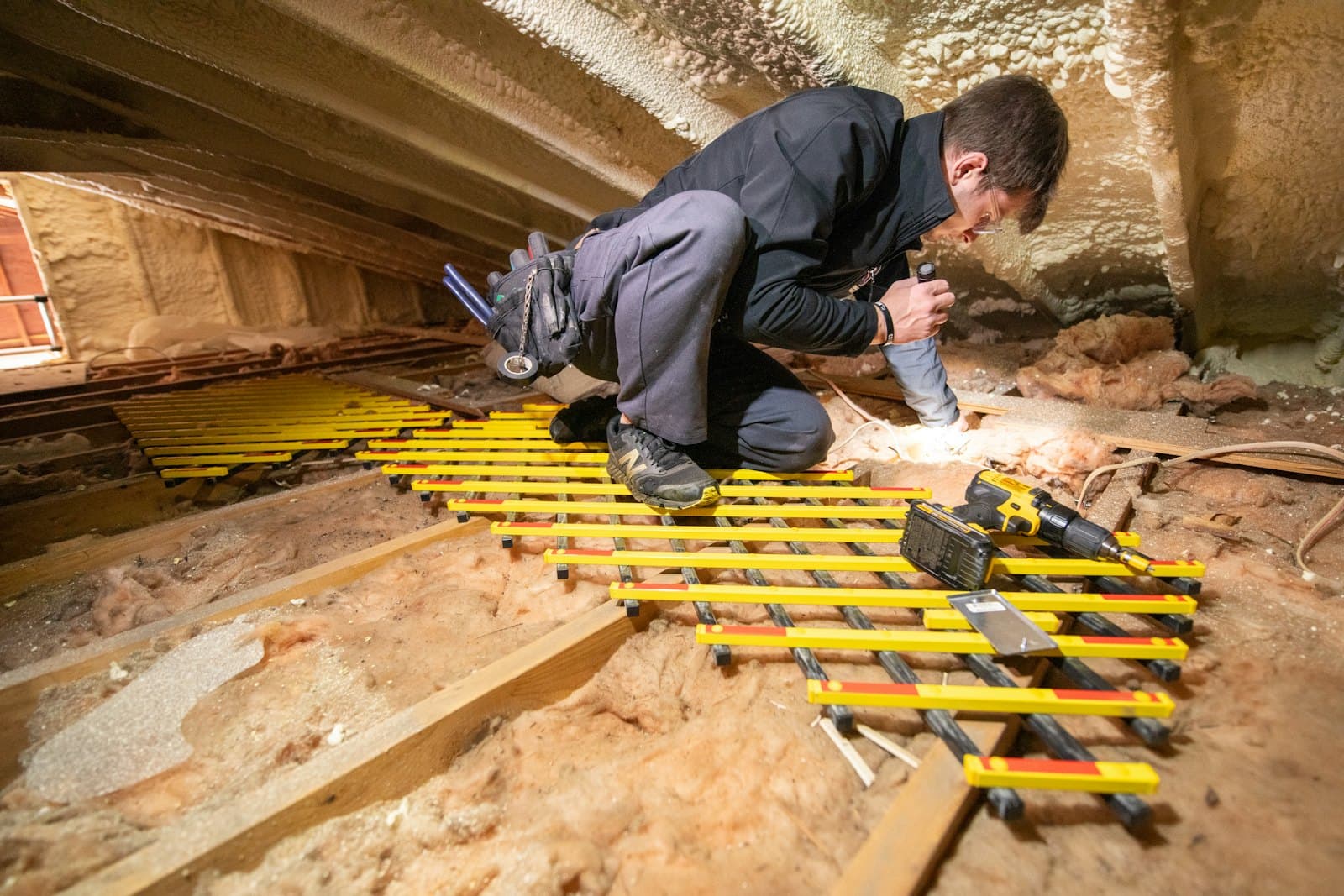
Loft insulation
Mineral wool laid between and across the joists to 270–300 mm so heat stays in the rooms below.
Loft insulation top-up
An extra cross-layer over existing insulation to reach the recommended 270 mm or more.
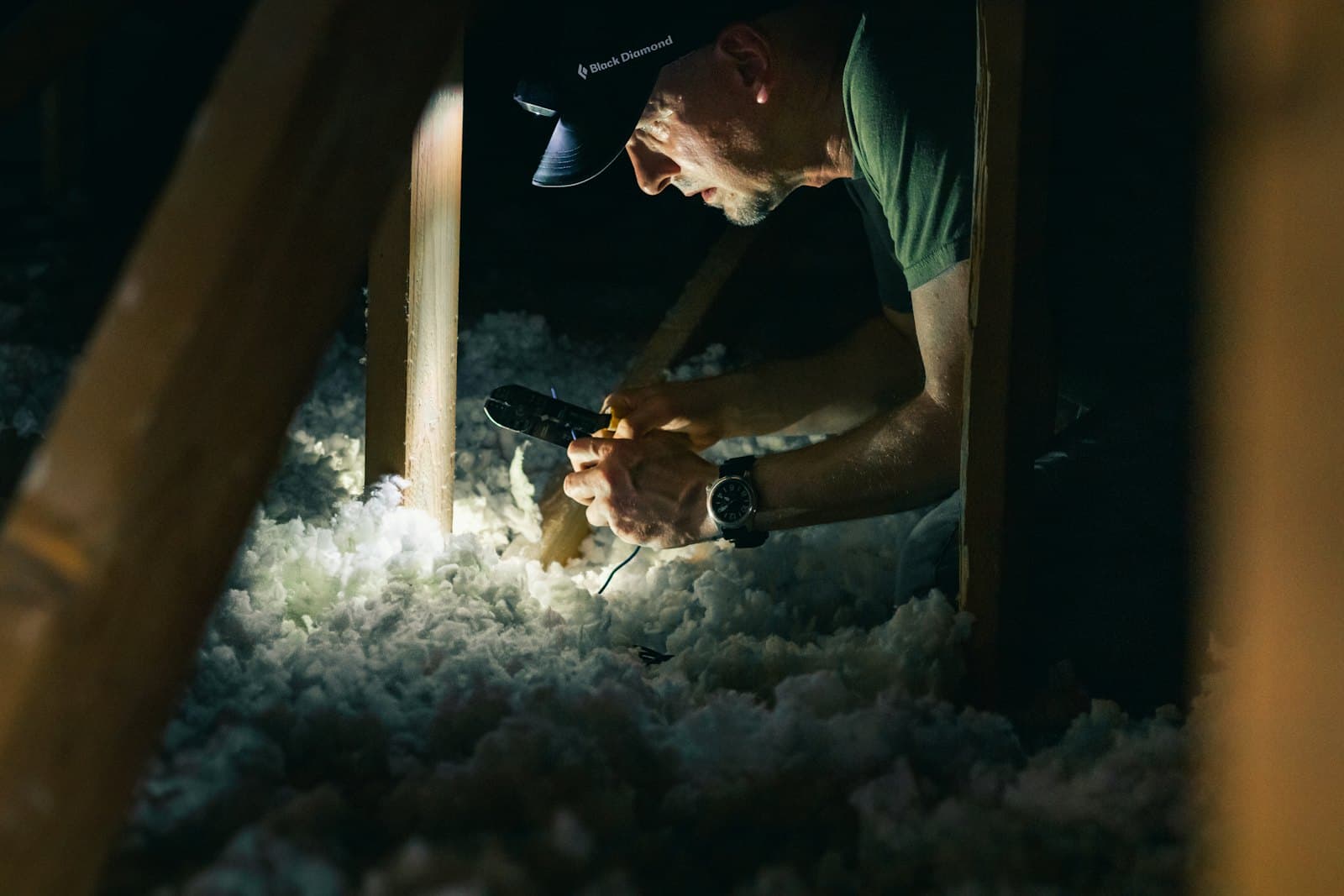
Blown loft insulation
Loose-fill insulation blown into awkward, shallow or low-headroom lofts that rolls can't reach.
Loft clearance and replacement
Old, damp or damaged insulation removed, the loft cleaned, then new mineral wool fitted.
Raised loft boarding and storage
Loft legs or raised boarding over full-depth insulation, so storage doesn't crush it.
Insulated loft hatch and ladders
An insulated, draught-sealed hatch and loft ladder — a small add-on that stops a big leak.
Begin your project
Start with the suitability assessment
Tell us about your home and we'll arrange a survey, then a fixed written quote — no obligation.